From handmade kuripes and tepis to ethically sourced Amazonian ceremonial tools, every item is rooted in tradition—bringing authentic hapé from South America to the USA and into your hands.
What is Hap'e and How Did It Come to America?
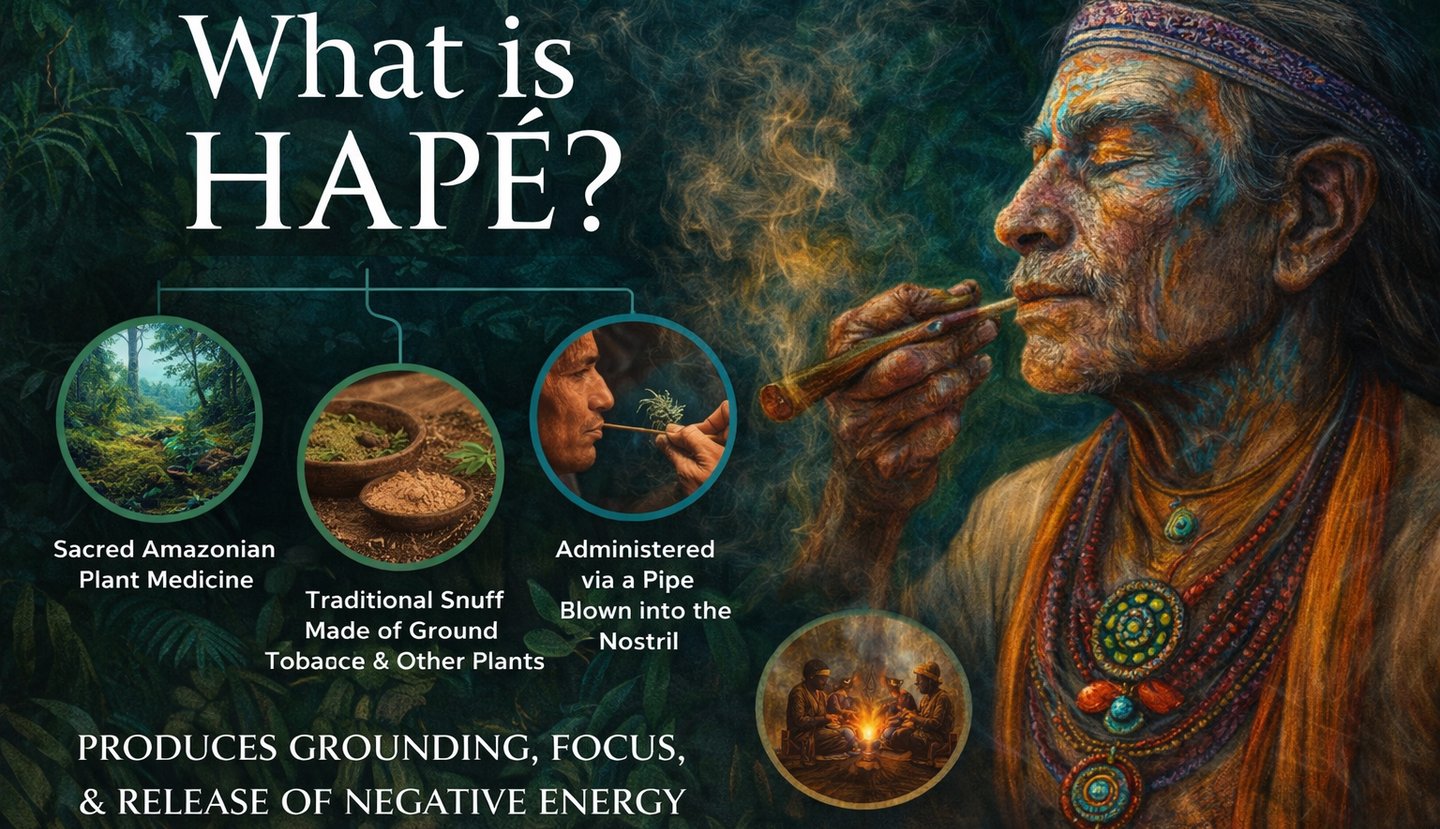
Hapé (Rapé) is a sacred Amazonian tobacco snuff used ceremonially for grounding and clarity, reintroduced to the Americas through Indigenous teachings.
Manifest Light
1/26/20265 min read
What is Hap'e and How Did It Come to America?
What is Hap'e and How Did It Come to America?
If you've been exploring plant medicine or attending breathwork circles lately, you've probably heard someone mention Hap'e (pronounced ha-PAY). Maybe you've seen those beautifully carved wooden pipes on an altar and wondered what they're all about. Or perhaps a friend shared their experience and you felt a quiet curiosity stir within you.
Whatever brought you here, welcome. Let's take a gentle walk through the origins, traditions, and modern journey of this powerful Amazonian medicine: and explore how it found its way from the depths of the jungle to spiritual communities across America.
SO What Exactly Is Hap'e?
At its heart, Hap'e (also spelled rapé) is a sacred shamanic snuff that has been used by indigenous tribes of the Amazon for thousands of years. It's not something new or trendy: this medicine has deep, ancient roots that stretch back further than we can trace.
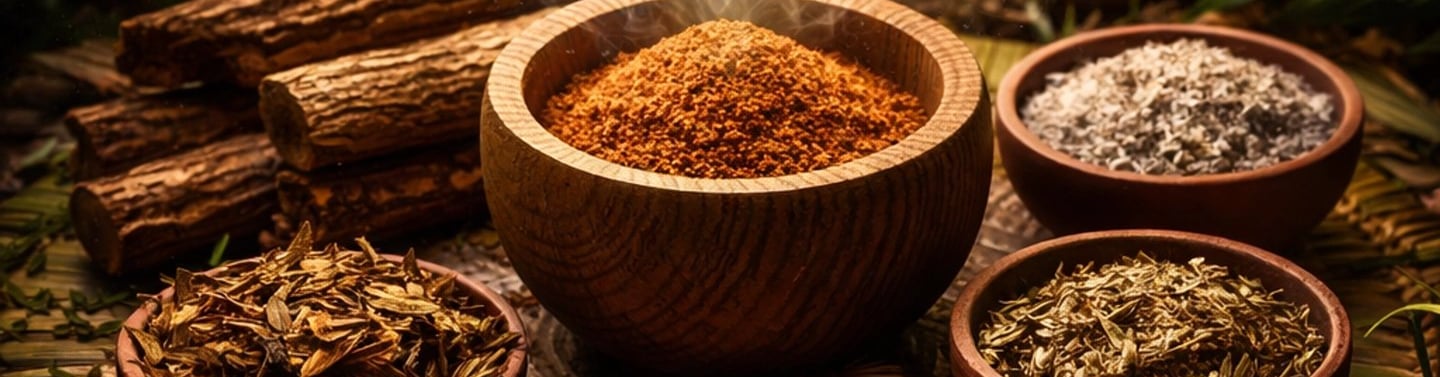
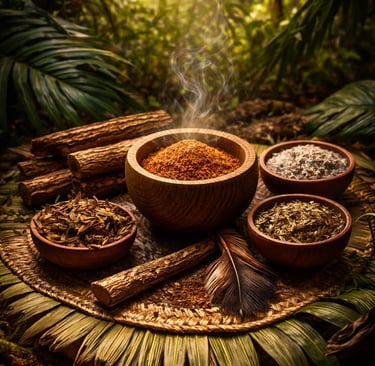
Hap'e is made from finely powdered mapacho (*Nicotiana rustica*), a potent strain of jungle tobacco that's far stronger and more sacred than commercial tobacco. This is then carefully blended with ashes from sacred trees, bark, and various medicinal herbs, depending on the tribe and the intended purpose of the blend.
Each recipe is unique. Some blends are designed for grounding and clarity. Others support emotional release or spiritual connection. The plants and ashes chosen carry their own energetic signatures, making each Hap'e a distinct teacher in its own right.
The Sacred Ingredients: Mapacho and Ash
Let's slow down and honor what goes into this medicine.
Mapacho is considered a master plant in Amazonian traditions. Unlike the tobacco most of us know from cigarettes, mapacho is wild, unprocessed, and treated with deep reverence. Indigenous peoples see it as a powerful ally: a plant spirit that can cleanse, protect, and open doorways to the unseen world.
The ashes blended into Hap'e come from specific trees and plants that hold their own medicinal and spiritual properties. These might include:
- Tsunu bark (for grounding and focus)
- Murici (for heart opening)
- Paricá (for vision and clarity)
- Cacao ash (for gentle, loving energy)
The preparation itself is a ceremony. The ingredients are ground with intention, often accompanied by prayers and songs. This isn't a product made in a factory: it's a living medicine, crafted by hands that understand its spirit.
The Indigenous Roots: Keepers of the Medicine
Hap'e originates from the indigenous tribes of the Amazon basin, particularly in Brazil and Peru. Among the most well-known keepers of this tradition are the Yawanawá, Huni Kuin (Kaxinawá), Katukina, and Nukini peoples.
For these communities, Hap'e is far more than a substance: it's a way of life. It's used in ceremony, in healing, before hunting, and as part of daily spiritual practice. The medicine is believed to clear panema (negative or stagnant energy), sharpen the senses, and create a bridge between the physical and spiritual realms.
Each tribe carries its own recipes and traditions, passed down through generations. The diversity of Hap'e blends reflects the rich tapestry of Amazonian knowledge: a reminder that there's no single "right" way to work with this medicine.
When we receive Hap'e, we're receiving a gift from these ancestral lineages. Approaching it with humility and gratitude honors the people who have safeguarded this wisdom for millennia.
How Is Hap'e Administered?
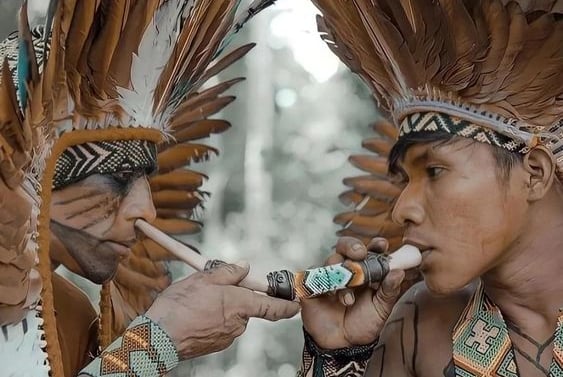
Unlike other plant medicines, Hap'e is administered nasally: blown gently into each nostril using a special Hap'e. There are two main types:
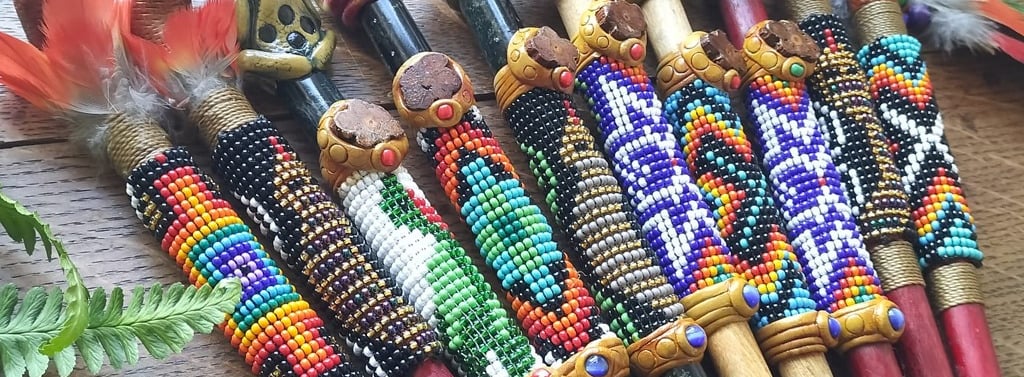
- Kuripe: A V-shaped Hap'e used for self-administration. One end goes in your mouth, the other in your nostril, and you blow the medicine into yourself.
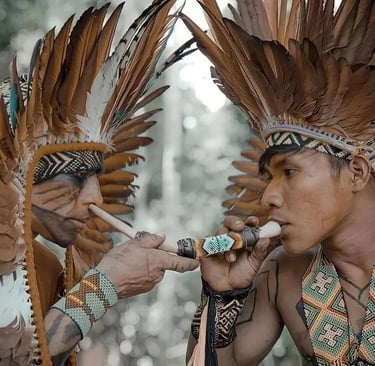
- Tepi: A longer, straight Hap'e used when someone else administers the Hap'e to you. This is common in ceremony, where a facilitator or shaman delivers the medicine.
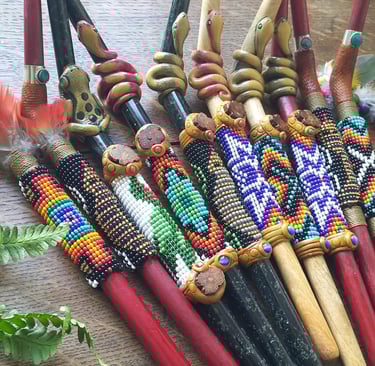
Both tools are traditionally crafted from bamboo, bone, or wood, often adorned with carvings and sacred symbols. The act of receiving Hap'e: whether from yourself or another: is itself a ritual. It requires presence, breath, and intention.
If you're curious about these beautiful tools, you can explore our collection of [kuripes and tepis (Hap'e tools)](https://www.pillarsofthejungle.com/kuripe-tepi-hape), each handcrafted with care and reverence.
What Does Hap'e Feel Like?
The experience of Hap'e is immediate and intense: but in a grounding way, not an overwhelming one.
When the medicine enters your system, you'll likely feel a sharp sensation in the sinuses, followed by a wave of warmth spreading through your head and body. Your eyes might water. You might need to spit or blow your nose. This is all part of the cleansing process.
After the initial intensity passes (usually within a few minutes), many people report:
- Mental clarity and stillness
- Emotional release: tears, laughter, or a deep sigh
- A sense of being grounded and centered
- Quieting of mental chatter
- Enhanced presence and focus
Hap'e is not psychoactive in the way ayahuasca or other plant medicines are. You won't see visions or lose touch with reality. Instead, it's more like a reset button: a way to clear the fog and come back to yourself.
It's often used before or after other ceremonial practices, including meditation, breathwork, or ayahuasca, to help prepare the body and mind. In some traditions and modern circles, Hap'e is also used alongside other gentle Amazonian allies like sananga eye drops, ambil paste, and bobinsana tea, always with respect, clear intention, and a listening heart.
How Did Hap'e Come to America?
For most of history, Hap'e remained within the Amazon, known only to the tribes who created and used it. So how did it find its way to yoga studios in Brooklyn and meditation circles in Austin? Houston ect to be continued...
A Gentle Invitation
Hap'e is not for everyone, and that's okay. But if you've felt called to explore this medicine, trust that curiosity. The plants have a way of finding the people who need them.
Whether you're seeking clarity, grounding, emotional release, or simply a moment of stillness in a noisy world, Hap'e offers a gentle yet powerful path. It asks only that you show up with an open heart and a willingness to listen.
The jungle has been waiting for you.
If you'd like to learn more about the plants and traditions we carry, we invite you to explore our [Sacred Hap'e collection](https://www.pillarsofthejungle.com/sacred-hape) and read about [our journey with Hap'e](https://www.pillarsofthejungle.com/-my-journey-with-hape-from-restlessness-to-stillness).


318 Main Street Ste D Old Town Spring, Texas 77385
Pillars of light
Orders@pillarsoflight.shop
© 2026. All rights reserved.
<meta name="google-site-verification" content="R2K_K6YWDLjZQvnM0pLn5ZoRkIfamJjE_dsJdXn9WgM" />